


Browse our tools, guides, and real-world examples to understand how the ‘true and fair’ requirement can be used to bring social and environmental impacts into financial reporting.
Resources

Company guides

The True & Fair Project engages legal experts around the world to produce guidance for company directors in regions where the true and fair requirement applies.
UK Company Guide
A guide that explains how company directors can recognise the cost of carbon in their financial statements under the ‘true and fair’ requirement set out in the UK Companies Act.

Spain Company Guide
A guide that explains how directors can recognise the cost of carbon in their financial statements under the ‘imagen fiel’ requirement set out in Spain’s Commercial Code and Spanish accounting standards.
Example financial statements
The following organisations have decided that additional information relating to sustainability issues is necessary for their accounts to give a true and fair view.


Research and guidance
Browse legal opinions, research papers and case studies to learn more about the true and fair requirement and how businesses are interpreting it in the context of sustainability.
Legal Opinion by George Bompas KC
The opinion on the true and fair requirement for company accounts is the first to consider the inclusion of sustainability issues. It states that directors and auditors have a ‘positive duty’ to consider if sustainability issues have consequences for the financial statements.
January 2024
The true and fair requirement in the European Union
A concise research summary on how the “true and fair” requirement appears in four EU jurisdictions. It focuses on Article 4 of Directive 2013/34 and the duty on directors to approve financial statements that not only comply with accounting standards, but also give a true and fair view.
September 2025
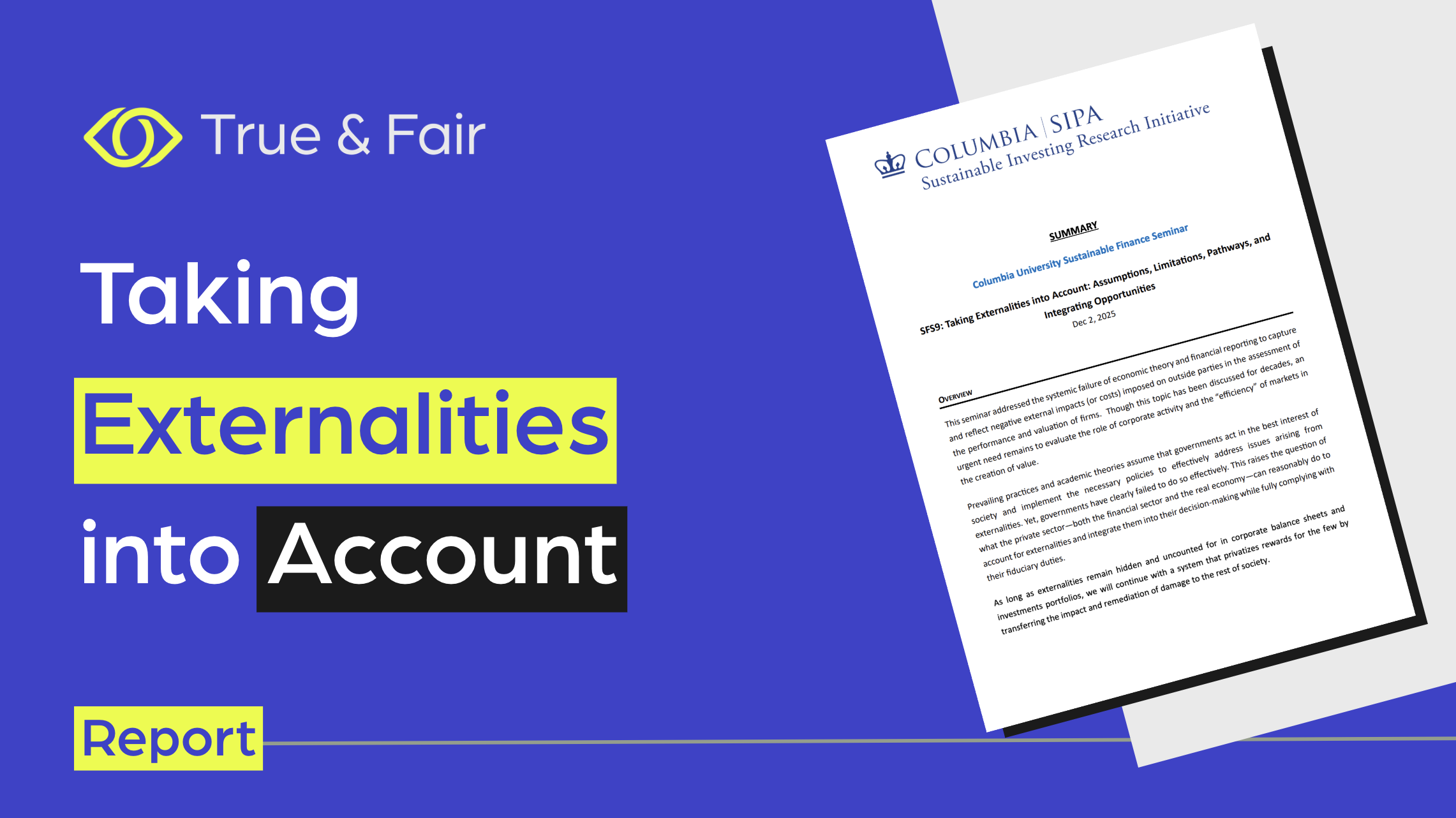
Taking Externalities into Account: Assumptions, Limitations, Pathways, and Integrating Opportunities
Following a presentation by Jeremy Nicholls at Columbia University, this write-up details his arugument that mainstream accounting standards are the root cause of externalities in an economic system that privatises rewards while transferring the costs of harm to society.
December 2025
Case Study: TrustedHousesitters brings its social cost of carbon into its financial statements
TrustedHousesitters has become one of the first companies of its size to disclose the social cost of carbon in its audited financial statements - a move that shows how accounting can be a powerful lever for climate action.
January 2026
True and Fair: A legal imperative for the financial sector
This discussion document strengthens the case for integrating sustainability into mainstream accounting - and highlights the role investors can play. Published in collaboration with the Centre for Climate Engagement (CCE).
March 2026
Why paying for harm done is not the same as an offset
An explainer that explains the difference between offsetting (specifically carbon offsetting) and compensating for harm done in the context of constructive obligations, financial reporting and the public interest.
June 2026
Making “True and Fair” Work in Today’s World: Applying judgement in a world of interconnected risk
ACCA's Global Forum for Governance, Risk and Performance argues that boards are operating in a world of interconnected, compounding risks that current reporting frameworks weren't designed for. Drawing on discussions with Jeremy Nicholls, the essay sets out what applying true and fair meaningfully looks like in practice.
June 2026
Climate change risk examples and checklist for legal practice
Guidance from the Law Society for solicitors on how climate and nature-related risks affect legal practice and client advice. Notably references the SVI legal opinion on directors' true and fair duties under the Companies Act 2006.
February 2026
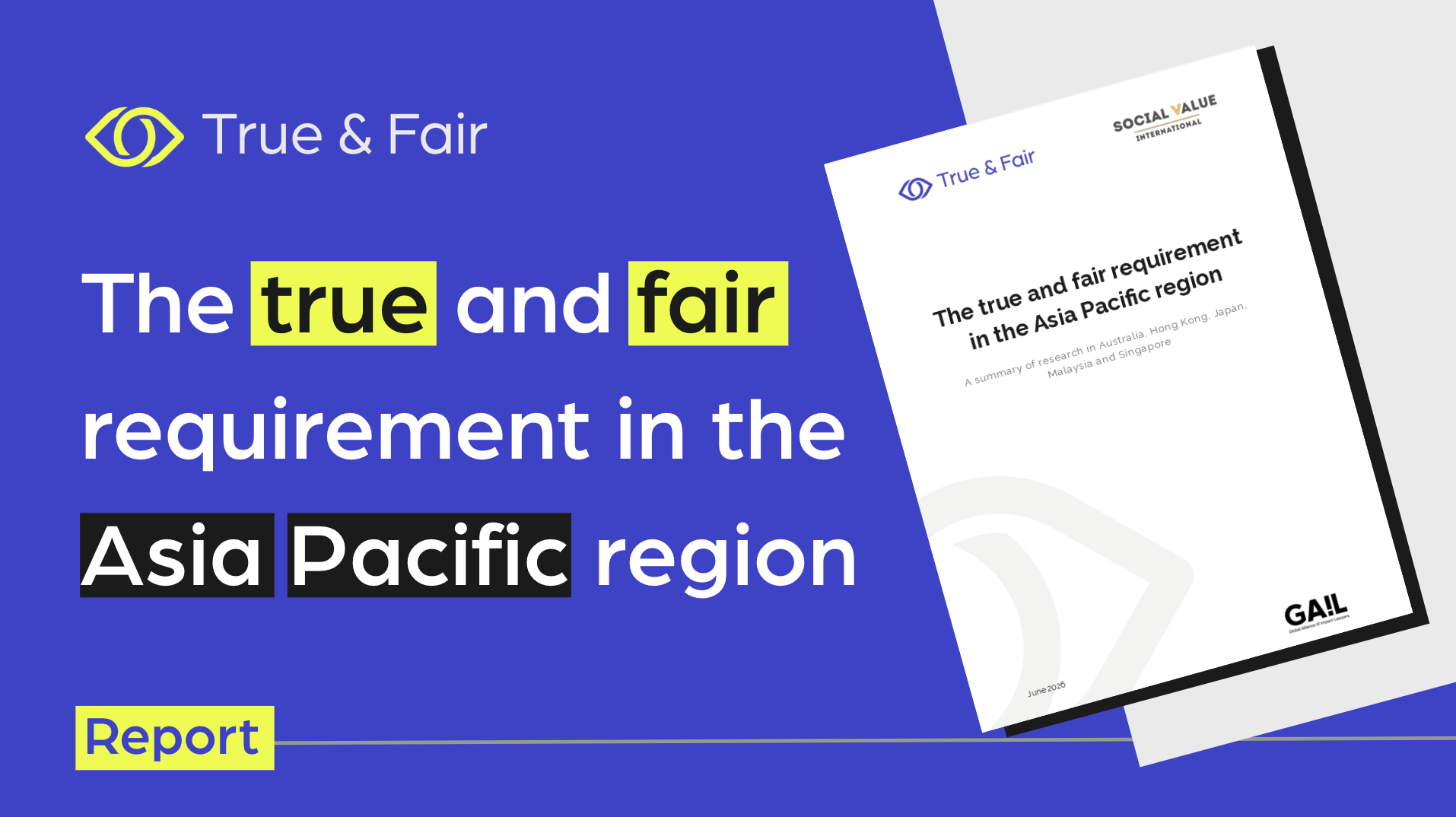
June 2026
The true and fair requirement in the Asia Pacific Region
Nine lawyers from the Global Alliance of Impact Laywers (GAIL) examine how the true and fair requirement (or its equivalent) applies in Australia, Hong Kong, Japan, Malaysia and Singapore.
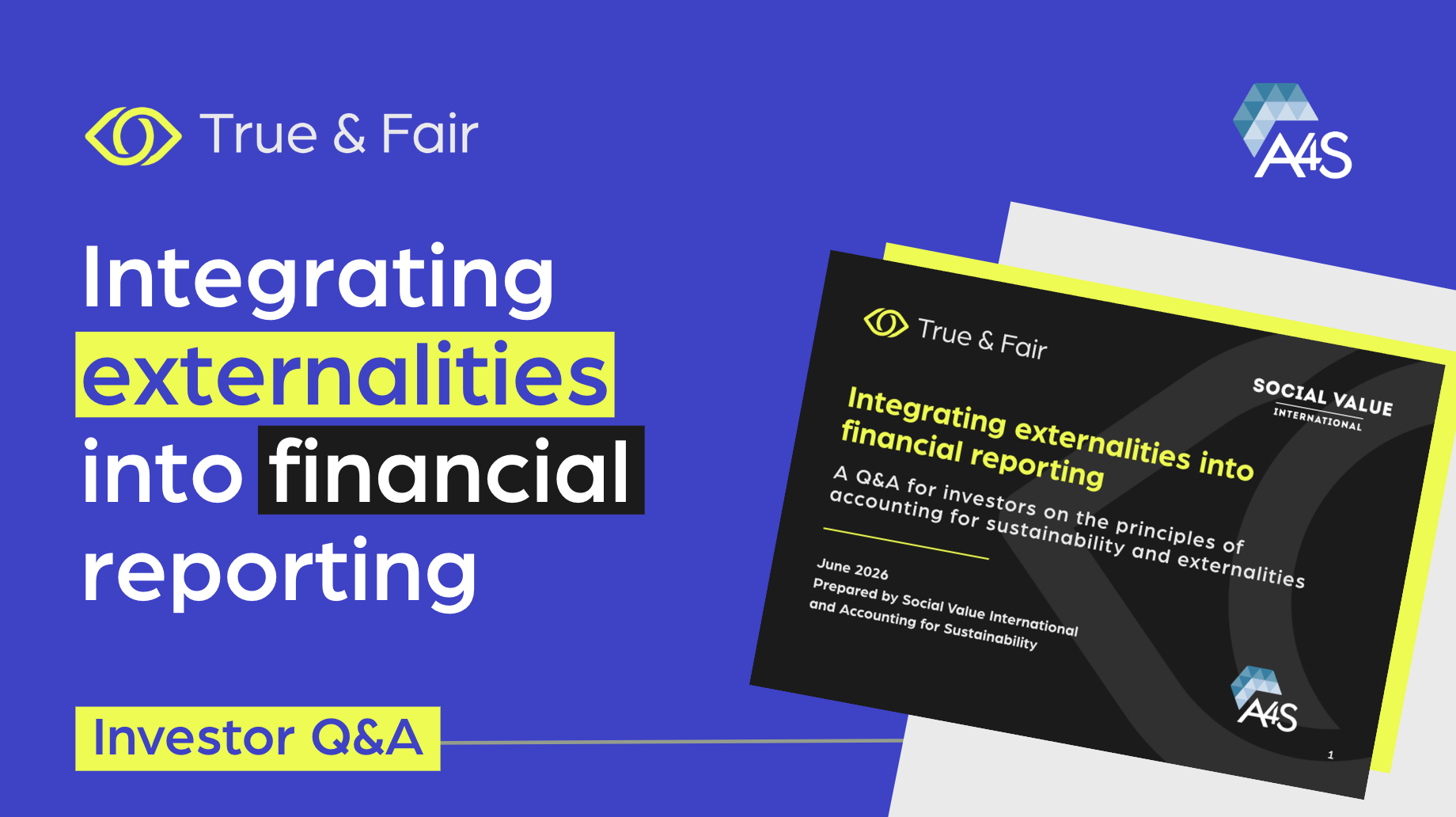
July 2026
Integrating externalities into financial reporting
Developed from an investor roundtable co-hosted with A4S, this Q&A responds to the questions investors most often raise about recognising externalities in financial statements. A practical starting point for investors engaging companies on the true and fair requirement.
SVI pioneers recognition of the social cost of carbon as a financial liability
Leading by example, SVI has recognised the social cost of its greenhouse gas emissions as a financial liability in its 2023/24 accounts, demonstrating how existing legal and accounting frameworks can reflect sustainability in statutory financial statements today.
June 2025
Relevant articles and media
True and Fair? How directors should be presenting accounts in the 21st century
This blog explores how sustainability issues like climate damage or social harm can, and should, be reflected in financial accounts, and offers practical steps directors can take to lead the way.
November 2022
Bringing a finance mindset into sustainability reporting: What lessons can we learn from the Conceptual Framework for Financial Reporting?
In his blog on A4S' Knowledge Hub, Jeremy Nicholls draws on the IFRS Foundation's Conceptual Framework to argue that sustainability reporting needs its own equivalent of a balance sheet and profit and loss account, and how they can be implemented.
June 2023
May 2024
Sustainability Commitments and Financial Accounting
A blog by SVI that responds to a decision by the IFRS Foundation on whether net zero commitments made by companies are constructive obligations and how they should be treated, and how this links to the work of the True & Fair Project.
May 2024
Boards can, and must, account for climate change
Accounting may not seem the most obvious arena for ambitious climate action, but CCE discusses the potential implications of the legal opinion commissioned by the True & Fair Project in 2024.
ESG is Dead, Be True and Fair Instead
A blog by Colin Mayer (Oxford/ECGI) arguing that ESG has failed — and that the real solution lies in requiring companies to report their true costs and fair profits. A compelling case for why "true and fair" is the right frame for reform.
May 2025
Q&A with SVI on the True and Fair Project
CCE's Nick Scott and SVI's Jo Fackler explain why the true and fair requirement is a practical route to internalising externalities, and why directors who want to act on sustainability already have the legal tools to do so.
May 2025
What if externalities were internalised?
This blog explains how existing accounting standards already allow for the inclusion of environmental and social costs, if directors choose to recognise them as obligations. It’s a powerful call to align financial accounts with the true cost of doing business.
July 2025
Risk culture: Reimagining true and fair accounting
What does "true and fair" actually mean for boards navigating climate and other material risks? Jeremy Nicholls joins ACCA's Risk Culture series to explore, in just 11 minutes, how financial accounts can (and should) tell a more complete story.
September 2025
November 2025
Do your financial statements really give a True & Fair View?
SVI worked with Accounting for Sustainability (A4S) to host a roundtable that looked into the true and fair requirement. Read the conversations that surfaced in this blog.
Systems thinking for a more sustainable world
Jeremy Nicholls sets out the true and fair argument for CPA Australia's ESG Livestream Series, connecting accounting standards reform to the challenge of systemic sustainability risk.
March 2026
Frankly Speaking podcast: Why accountants aren't saving the world
A wide-ranging conversation with Jeremy Nicholls on why the heart of the sustainability problem lies in financial accounting standards, and not ESG or sustainability reporting, and what it would take to fix it. Includes discussion of Jeremy's book, 'The Accounting Paradox' and the case for wellbeing accounting.
April 2026
June 2026
Etki Ekonomisi: Yeni Kurallar
(Impact Economy: New Rules)
In this interview with Turkish magazine, Platin, Jeremy Nicholls discusses his book, The Accounting Paradox, and argues that current profit calculations trap us by ignoring the costs of harm, when accounting standards already let directors take responsibility for those costs through a constructive obligation.